
As artificial intelligence (AI) reshapes industries and everyday life, education is also experiencing profound transformation. One individual at the forefront of this change is Wu Chon Meng, a mathematics teacher at Pui Ching Middle School in Macao with more than two decades of classroom experience. Guided by a strong commitment to professional growth, Wu recently completed the Doctor of Education programme at the University of Macau (UM). His journey illustrates how educators can evolve in the AI age—embracing innovative practices while remaining steadfast in their mission to nurture the next generation.
From civil engineering to educational leadership
Since entering the teaching profession in 1999, Wu has devoted nearly 27 years to education. After completing his bachelor’s and master’s degrees in civil engineering in Taiwan, he returned to Macao to begin his career in the engineering sector. At the same time, he taught mathematics part-time at a secondary evening school. Although he had not received formal training in education, Wu quickly discovered both a talent and a passion for teaching. This realisation prompted him to pursue a postgraduate certificate in education, formally qualifying as a teacher. Committed to continuous professional growth, Wu later earned a master’s degree in educational economics and management from South China Normal University. In 2021, he embarked on a new academic chapter by enrolling in the UM Doctor of Education programme to deepen his engagement in educational research.
Wu’s interest in teaching can be traced back to his university years, when he often tutored younger students. After formally entering the profession, he taught both physics and mathematics in his early years before choosing to specialise in mathematics. In 2006, he joined Pui Ching Middle School, where he progressed steadily from mathematics teacher to subject head and, in recent years, assumed the role of director of AI education.
Advancing AI integration in mathematics education
Wu’s research is firmly grounded in classroom practice and curriculum reform. He observes that in traditional mathematics instruction, students often perceive the subject as abstract and disconnected from everyday life, which can weaken their intrinsic motivation. To address this challenge, he promotes a problem-driven approach in which teachers and students collaboratively explore real-world issues. By situating mathematical concepts within authentic contexts, he seeks to foster students’ capacity for self-directed learning. In this process, AI serves not as an end in itself, but as a tool that supports deeper inquiry and application.
One project that illustrates this approach is a technology innovation initiative centred on martial arts learning. The idea originated when students observed their elders practising Tai Chi and began asking how technology might make traditional training more accessible, affordable, and effective. Building on this real-life observation, students in an ‘AI and Mathematics’ course first examined the principles underlying human pose recognition algorithms. They then applied mathematical concepts—including vector geometry, angle measurement, cosine similarity, and three-dimensional coordinate systems—to design and develop a programming model. The project ultimately resulted in an AI-based system capable of automatically analysing and evaluating martial arts movements.
Reflecting on the experience, Wu explains that, with teachers’ guidance, students investigated the logic of existing applications and applied their mathematical knowledge in purposeful ways. ‘When students identify genuine needs in their daily lives,’ Wu notes, ‘learning shifts from passive reception to active exploration. In this problem-driven model, students move beyond simply using technological tools to creating them—strengthening their spirit of inquiry and fostering authentic innovation.’
Insights and growth at UM
Reflecting on the relationship between AI-supported education and mathematics education, Wu highlights the insights he gained during his doctoral studies at UM. ‘Many of my classmates are education administrators and teachers from schools in Macao and the mainland. They gave me valuable opportunities to engage in in-depth discussions about teaching practices and reform initiatives,’ he says. Through these exchanges, he observed that in many mainland schools, where programming competitions are emphasised, information technology often serves as the primary entry point for AI instruction. By contrast, Wu’s school places greater emphasis on guiding students to apply programming skills to address real-world challenges.
As a result, Wu arrived at a deeper realisation: meaningful AI curriculum development must be grounded in solid mathematical foundations and logical reasoning. For this reason, he advocates beginning reform with ‘AI-integrated mathematics’ before extending innovation to other disciplines. He explains, ‘Mathematics is a core subject to which students devote a significant amount of time. When thoughtfully integrated with AI, it enables them to understand both fundamental principles and practical applications, rather than acquiring fragmented or superficial knowledge.’ Within a STEM framework, he adds, mathematics serves as the foundation for interdisciplinary learning, enabling students to connect computer science, physics, and other fields in addressing authentic problems.
Wu’s decision to pursue doctoral studies grew out of sustained reflection on the increasing influence of AI in education. As initiatives introduced by the Macao Education and Youth Development Bureau, together with his school’s curriculum reforms, placed greater emphasis on AI, Wu began to ask deeper questions: Why should AI be promoted in schools? How can teachers integrate AI meaningfully into classroom practice? How should staffing structures and instructional design adapt to AI-enhanced learning? And what impact might this transformation have on learning outcomes? These questions formed the foundation of his doctoral research, titled The Inter-Relationship among Teacher Work Engagement, Student Self-Directed Learning and Their Mathematics Achievement: A Case Study in Macao. The findings have provided an empirical basis for the structured implementation of AI-integrated education at his school.
Building on this philosophy, Wu proposes a two-tiered approach to implementing AI-integrated mathematics. At the primary and junior secondary levels, foundational AI concepts should be introduced to ensure broad exposure. At the senior secondary level, more advanced, mentor-guided small-group instruction can support students who wish to explore the subject in greater depth. Ultimately, he emphasises, the goal is not simply to use AI as a supplementary tool for learning mathematics—or to treat mathematics merely as a technical prerequisite for AI. Rather, it is to achieve genuine two-way integration, in which mathematical reasoning and technological application develop together, enabling students to grow both intellectually and practically.
Leading the transformation of AI-integrated teaching
While integrating AI concepts into classroom instruction, Wu has also taken on a broader leadership role in embedding AI tools into his school’s overall teaching framework. ‘Our school has developed an AI-enabled learning platform with built-in assessment features,’ he explains, ‘in line with the Education and Youth Development Bureau’s vision of “intelligent learning assistance” aimed at reducing workload and improving efficiency.’
The platform generates personalised learning materials and exercises based on each student’s level of mastery. Students who demonstrate a strong understanding receive enrichment and extension tasks, while those who need additional support are provided with targeted foundational practice. ‘This system not only enhances learning outcomes but also reduces teachers’ administrative workload. By automating tasks such as grading assignments and analysing learning data, the platform frees teachers to focus on meaningful interaction, mentoring, and collaborative inquiry. In this way, AI functions as a tool that enables more precise and individualised instruction—bringing to life the long-standing educational principle of teaching according to students’ aptitude,’ he says.
However, Wu recognises that implementing AI-integrated mathematics education is not without challenges. The most pressing issue, he notes, is teacher readiness. He recalls a question raised by Fan Lianghuo, dean of UM’s Faculty of Education (FED): What defines an ideal AI mathematics teacher? In Wu’s view, such an educator must combine deep disciplinary expertise in mathematics with a solid and systematic understanding of AI—an uncommon and demanding blend of competencies.
Addressing this challenge requires sustained institutional effort. Wu has therefore championed internal capacity building within the school, encouraging mathematics teachers to engage in AI-related professional development and gradually cultivating a specialised team capable of delivering integrated instruction. At the same time, he identifies another key concern: the localisation of teaching resources. Since Macao’s educational context and student profile differ from those of other regions, external materials cannot simply be adopted without careful adaptation. As Wu emphasises, ‘We need to develop a knowledge framework grounded in our local context, ensuring that AI platforms truly align with our students’ needs.’
A commitment to lifelong learning
For a full-time teacher, pursuing a doctorate while continuing to work brings added responsibility and significant pressure. Wu reflects that his studies at UM deepened his understanding of what lifelong learning truly entails. ‘The teaching profession requires us to keep improving ourselves,’ he says. ‘Whether through professional development programmes or formal academic study, these are all important pathways for growth.’ Balancing professional responsibilities with academic pursuits was not new to him. For many years, he balanced daytime teaching with evening study, a rhythm that became even more demanding during his doctoral years. He recalls, ‘There were times when we went straight from the airport to the UM campus after overseas commitments, arriving with our suitcases to attend class alongside colleagues who were also my classmates.’ Yet he does not describe these moments as sacrifices. Instead, he sees them as natural steps in an ongoing journey of personal and professional growth.
Wu firmly believes that educators must model the very mindset they hope to cultivate in their students. ‘Teachers must first be lifelong learners themselves if we expect our students to adapt to a rapidly changing world,’ he emphasises. In this way, Wu’s own perseverance serves as an example to younger generations. ‘If I can overcome difficulties at my age,’ he says, ‘young people can certainly find the courage to overcome their own challenges.’
During his doctoral studies, Wu also participated in various academic conferences, including the 3rd International Exchange Forum for Early- to Mid-Career Mathematics Educators, co-organised by FED and the Chinese Society of Mathematics Education. At the forum, he shared his philosophy of AI-integrated education and presented examples of his teaching practice to educators from different regions. At the same time, he gained valuable insights from their experiences. Wu acknowledges that preparation time was tight. Fortunately, much of his presentation was based on real cases drawn from his everyday teaching and research. With the support of his team, he was able to deliver a clear and coherent report. The experience also helped him better understand the pressure and growth that students experience when studying abroad. Having navigated similar challenges himself, he found that he could relate more deeply to his students and share his own experiences with them. This, in turn, further strengthened his belief in lifelong learning and in the idea that teachers and students grow together.
From civil engineering to mathematics education, and from traditional teaching methods to AI integration, Wu’s journey reflects both a strong sense of responsibility and a willingness to innovate in a time of rapid change. Throughout his career, Wu has remained not only a dedicated teacher but also a committed learner. By approaching change with curiosity and determination, he continues to move forward—learning, leading, and encouraging others to grow alongside him.
Source: My UM Issue 152
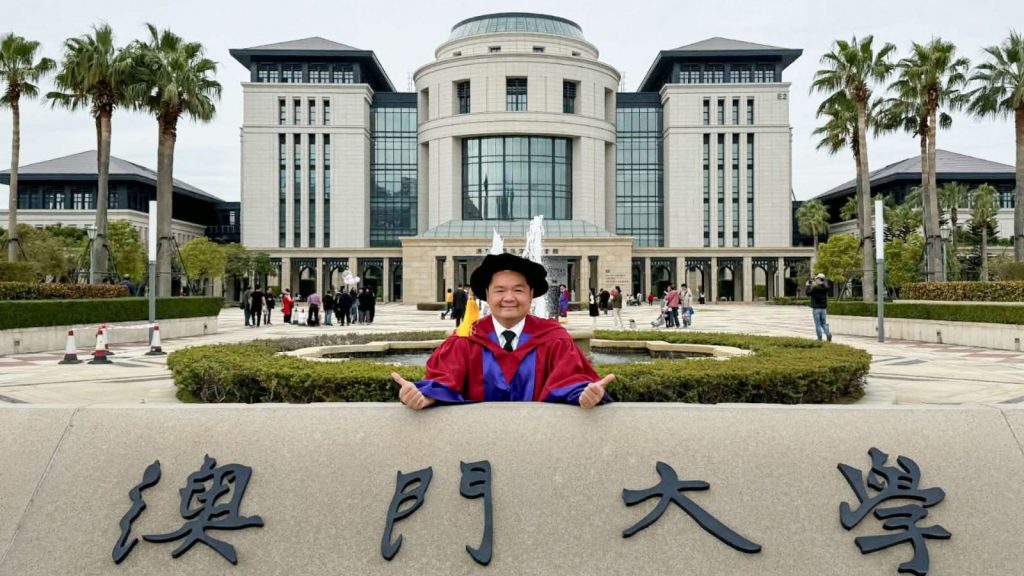
UM alumnus Wu Chon Meng: Advancing AI-integrated mathematics education
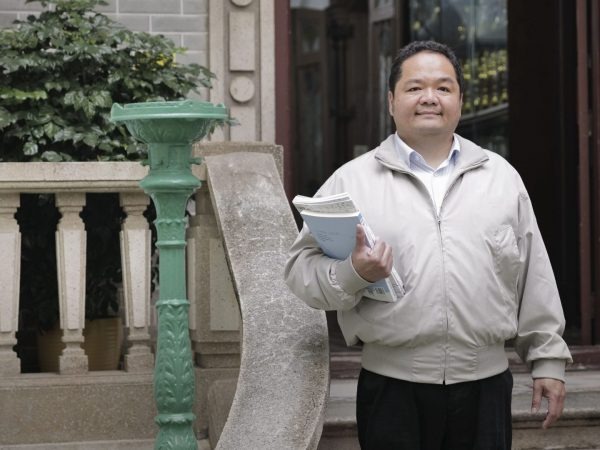
Wu Chon Meng
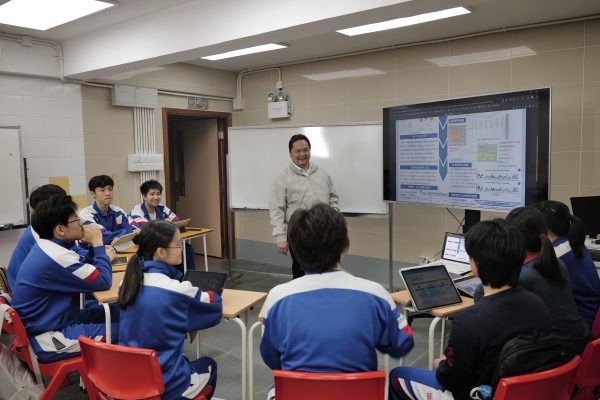
With more than 20 years of teaching experience, Wu is widely respected by his students
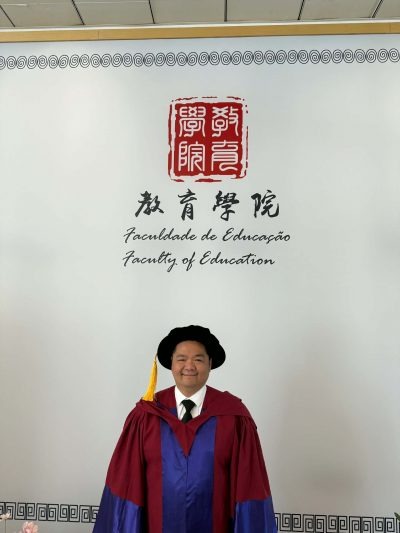
Wu is deeply inspired during his doctoral studies at FED
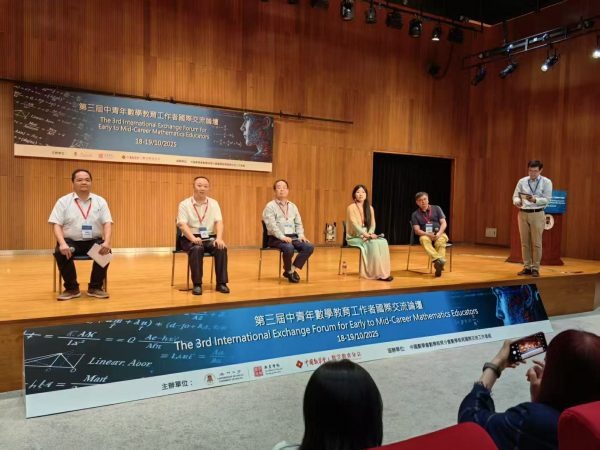
During his doctoral studies, Wu participated in various academic conferences and exchange activities
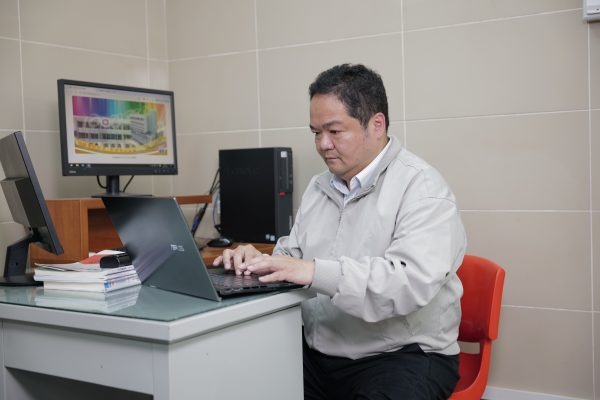
Committed to lifelong learning, Wu leads by example and encourages his students to strive for continuous growth


